Helical heaps have gained their place in office job since they mix expected habits along with prompt setup. You get immediate capability analyses from torque correlation, and you can easily install in strict metropolitan web sites with marginal spoils. Still, every experienced installer and also designer understands the very same truth: the actual verification of a deep-seated base resides in the lots exam. On a healthcare facility add-on in clay-based, on a stockroom piece where resolution resistances are actually petty, or on a keeping wall surface utilizing helical tieback anchors, you just obtain confidence when the stacks or even anchors reveal their efficiency under measured load.
This post pays attention to load testing methods customized to commercial helical pile installation as well as helical tieback anchor work. It likewise touches the edges where micropiles, protection heaps, as well as various other deep foundation repair approaches fulfill the exact same need for proof. The objective is functional guidance: what to test, how to assess it, as well as how to analyze the results without receiving misguided by sound in the records or impractical expectations.
Why our company check, even when torque appears good
Helical heaps have a convincing sales sound: set up along with an adjusted ride crown, screen twist, and correlate to capability. In well-maintained sands and residues, the correlation usually keeps within 10 to 20 percent, which is exceptional for production. Commercial helical pile installation, however, hardly ever occurs in schoolbook strata. Our company view layered fills up, varved clays, set down groundwater, and also electrical passages that have actually agitated the soil over many years. Torque spikes prevail, and also soft wallets can hide between tight horizons.
Load screening validates 3 things you may certainly not observe throughout setup. To begin with, the actual bunch transfer system at the helices and also along bum rap. Second, creep habits as time go on, which matters when a commercial foundation stabilization plan should live under a vulnerable superstructure. Third, the architectural performance of the device on its own: couplers, shafts, cement columns in combination bodies, and caps.
I recall a retail slab-on-grade retrofit where twist advised 50 kips per stack. The load exam presented appropriate utmost capacity near that market value, yet the motion at company load was too large for the piece. The solution involved utilizing bigger top parts along with deeper coils to minimize deflection, not just chasing after greater twist. Without a load examination, our company will have fulfilled the character of capacity and also still let down the manager along with slab curling and also dividing cracking.
Choosing a test style that matches the project
Static central compression as well as tension tests are actually the foundation for helical piles as well as helical anchors. Sidewise exams are less usual however essential for signage, tower manners, as well as some canopy sustains. For tieback anchors, proof and also efficiency exams under strain describe the system. Dynamic exams appear much more along with steered stacks than with helicals, as well as while you can work swift lots exams on micropiles, helical bodies respond best to sustained stationary filling due to the fact that displacement and creep under consistent load are the key criteria.
For commercial resistance pile installation and micropile installation, static tests adhere to comparable reasoning, however the instrumentation differs. Micropiles often welcome tension determines to separate connect zone from ground anchor area. Resistance heaps, specifically press piers made use of in structural foundation repair, take advantage of on-jack assesses that looking glass service circumstances during the course of underpinning.
When managers seek value engineering, the temptation is actually to reduce load screening to begin with. That is actually a false economy. A single properly carried out performance test on a propitiatory helical pile, plus proof exams on a portion of production systems, normally lowers the total risk and also may also enable rational decreases in product or even depth that conserve greater than the examination costs.
Standards, requirements, and also sensible thresholds
Most business specifications draw from ICC-ES approval criteria, ASTM requirements, as well as geotechnical suggestions. For helical piles and helical anchors, the popular endorsements feature ICC-ES AC358 and ASTM D1143 for squeezing, ASTM D3689 for strain, as well as ASTM D3966 for side. Tieback anchors often comply with PTI recommendations for screening and also lock-off procedures. These documents mapped out step filling, have times, and acceptance standards for activity and also creep.
Serviceability restrictions are as vital as greatest capability. For commercial foundation repair and brand new building and construction, company tons motion limits may vary from 0.25 to 0.5 ins at total layout bunch, at times tighter for slab-supported equipment. Creep requirements at the last grip action normally restrict movement to a few thousandths of an in per moment over a described time period, typically 10 mins. The exact amounts acquire tuned to forecast demands, dirt style, as well as threat tolerance.
One useful rule of thumb: if you are actually setting up in soft clay-baseds along with liquidity indices near 0.7 or greater, emphasize longer hold time periods. Clay-based needs to have opportunity to present its different colors. Sands react swiftly, but may display leisure. Silts sit in the uncertain center. Your method needs to reflect the ground's opportunity dependency or even you may pass an exam that later comes to be a settlement claim.
Equipment that maintains data honest
Load testing gears are actually simply just as good as their references. The response framework need to be stiff and also anchored in a way that does certainly not infect the dimension. For compression exams on helical piles, this commonly means a test beam connected to nearby response stacks ingrained deep sufficient to avoid impact from the test heap. In stress, reaction structures grab onto supports or deadmen. For helical tieback anchor screening, the response is actually generally the wall itself or even a steel strongback along with ample spreader beams.
Digital tons tissues and stroke transducers have ended up being the rule in office job, certainly not just nice-to-have. A 100-ton weak ram joined an adjusted pressure transducer is actually alright if you possess a clean calibration contour and also confirm every scale just before the exam set. Straight variation transducers installed individually of the jack, checking out versus a dealt with referral outside the reaction region, remove the inaccurate motion that stems from framework deflection or even jack seats. If your data acquisition body captures bunch as well as displacement at 1 Hz or faster, trending and also creep evaluation end up being straightforward.
For micropiles and also protection stacks, you might likewise add dial determines pinned to a small referral beam to cross-check the electronic tools. Redundancy matters when a tiny analysis may guide approval. On a courthouse deriving along with protection stacks, our team found an angled jack port providing high pressure analyses. The dial determines informed the real story. That tiny cross-check spared a pile cut-off as well as re-drive.
Establishing an exam matrix that makes confidence
On large websites, grounds vary. Evaluating a solitary helical turn in the superficial stuffing at the n. edge tells you little regarding the much deeper alluvium near the river. The examination source requires to disperse across the site, straighten along with the geotechnical account, and work with each concept alternative: stack top arrangements, helix dimensions, bar dimensions, and also embedment depths. When commercial helical pile installation supports both column tons as well as slab loads, exam both scenarios. For helical tieback anchor work with a stepped keeping wall surface, examination the uppermost and also lower workbenches given that surcharge and also ground density will definitely differ.
A common pattern sets 1 or 2 performance examinations, frequently to 200 per-cent of concept lots, with proof testing on 5 to 10 per-cent of development devices to 133 percent. Ventures with high effects or even combined grounds may drive efficiency examinations to 250 percent as well as verification to 150 percent. Tieback anchors normally obtain proof checked to a lock-off strategy, then packed symphonious to 120 to 133 per-cent, along with creep evaluated on top grip. If movement or creep exceeds approval restrictions, check out and readjust the style prior to waging production.
On a logistics storage facility outside Des Moines, we functioned three achievement examinations on helical piles along with 10-12-14 in coils. The southerly examination hit thick sand early, as well as the capacity exceeded the twist quote through nearly 30 per-cent. The northerly zone rested over a silty clay layer and also matched twist relationship within 5 per-cent. The mid zone looked typical but presented obvious creep at 150 per-cent of design. Our team secured service motion requirements there certainly and also specified a lot longer coils to reach out to a lower stress perspective, which later on maintained piece joints limited under forklift traffic.
Step launching that exposes real behavior
Static tons exams must harmonize efficiency along with analysis value. Stepping too promptly conceals time-dependent activities and may misdiagnose the ability. An audio procedure for squeezing might fill the helical pile to 25 per-cent, half, 75 percent, one hundred percent, then 133 percent, along with 5 to 10 moment holds at each measure and longer holds at the top. After getting to the maximum exam lots, unload symphonious, securing briefly to document elastic recovery. If the spec requires a failing examination, continue filling in smaller sized increments till the motion increases without load rise, or up until you hit the secure limits of the frame.
For stress, the steps and contains are actually identical. Focus on preliminary seats or even bedding-in movement as the relationships as well as cement, if any, use up resistances. Helical tieback anchors usually adhere to a verification test pattern: chair at a small tons, cycle around the optimal examination lots along with specified carries, after that come back to the lock-off lots. Creep is actually measured just at the top bunch on a fresh application, certainly not in the course of cycles, to stay away from complex plastic prepared with time-dependent deformation.
The hold opportunity controversy appears on nearly every work. Some desire 5 little keeps for speed, others promote 10 or even 60 minutes in clay-baseds. My technique is to line up with the soil. Sands and gravels, five moment conducts at advanced beginner steps and also 10 to 15 minutes at the max are actually commonly enough. In fatty tissue clays, double those times. If your displacement arc flattens, you may validate proceeding. If it keeps slipping at a quantifiable fee, perform certainly not neglect the trend.
Reading the curves without misleading yourself
An excellent load test document narrates. The weight versus movement story presents tightness adjustments as helices interact various layers, and also the offload pathway mention shaft elasticity versus soil set. In a tidy end result, the very first component of the contour is high, then it relaxes as set in motion protection develops, as well as ultimately it either stage towards failing or remains dependable within the solution variation. Creep stories separate flexible activity coming from time-dependent soil response.
Look for subtle clues. If the displacement dives at reduced tons, check for seats or framework https://www.unitedstructuralsystems.com/who-we-serve/home-owners/ slippage. If creep at 133 per-cent of style declines from 0.005 inches per min to 0.001 inches every moment over the grip, that is actually healthy and balanced unification. If it stays at or above 0.01 inches per minute, especially in clay-based, you are coming close to an utility limitation even if best capacity is not arrived at. Tiebacks along with excessive rebound on unload may have bedding slop near the bearing plate rather than issues in the ground. Clean up the bearing surfaces as well as retest before altering the design.
Micropiles and also protection heaps say to similar stories along with slightly different trademarks. Micropiles along with a long bond size show a steady tightness rise as even more of the grout-rock interface propels. Resistance heaps steered for deep foundation repair present load-displacement contours controlled by rubbing along the shaft and occasionally display snap-back on offload if the stack locks right into a stiffer level at intensity. In each instances, think about just how the load transfers as well as whether the observed movement fits the mechanism you expect.
The link in between installation data and also examination outcomes
Installers usually obey twist graphes, as well as for good explanation. Helical twist to capability connections, calibrated due to the particular helix geometry and shaft type, create an easy estimate of supreme protection. An oversight I find is managing torque readings as gospel across combined profile pages. If the top section sits in rigid residue however the upper helix rides in loosened filler, you can easily attack intended twist while leaving behind the upper bearing factor underdeveloped, which harms hardness and raises resolution under solution load. A weight exam will expose this in the early portion of the curve.
Track torque per change, crowd stress, and also fee of seepage. A continuous torque rise along with uniform penetration suggest constant soil. Spikes along with stalls suggest cobbles or debris. When these signatures connect along with the test site, you gain circumstance for the movement actions. On a commercial helical pile installation under a refrigerator pad, our company saw great torque at shallow intensity. The load test felt soft at solution. The repair was actually revolving deeper to seating the bottom coil in to pure soil, which stabilized the action and also cut the service movement in half.
For commercial resistance pile installation, the analog is actually disk stress and also movement per press. For micropiles, it is actually grout take and tremie pressure throughout placement, plus bond span and also stone outlet guidelines. If the lots test mentions the main thing as well as your installation records state yet another, look into prior to you opt for a side.
Acceptance standards that do certainly not package you in
Rigid criteria frequently lead to excessive pile replacements. Affordable acceptance for a helical turn in squeezing might feature a max net activity at layout lots, state 0.5 ins, and a creep rate listed below a pointed out limit, such as 0.01 inches in the last minute of a 10 min grip at 133 per-cent of layout. Tieback anchors typically demand lower than 0.04 ins of motion between one as well as 10 minutes at the top test load, complied with through steady lock-off. These are actually examples, certainly not global market values. Ventures with delicate exteriors or high-precision devices might ask for tighter numbers, while majority storing or racks may endure more.
Remember the trade in between best capability as well as service functionality. You can easily accomplish higher greatest ability with little coils in dense sand, yet still have a lot more elastic motion than the framework really wants. Much larger helices or even deeper embedment increase connect with region as well as decrease displacement at service. If an examination directly falls short a solution activity standard but reveals low creep and higher utmost safety and security, a moderate redesign usually solves it without junking the pile type.
Tension screening and the subtleties of tieback anchors
Helical tieback anchors act in different ways than vertical stacks. The bunch path undergoes the support head, along the shaft, as well as right into the coils settled in the passive zone. The free of charge length, whether a soft expansion or even a sleeved area, have to remain unbonded near the wall structure to make it possible for lock-off without bunch reduction. Throughout commercial helical tieback anchor installation, consistent installment slant, helix space, and also depth behind the theoretical breakdown plane matter more than the majority of appreciate.
A noise tieback proof exam patterns the load to the optimal test level, secures for creep analysis, and after that minimizes to the lock-off tons while evaluating elastic recuperation. Excessive non-recoverable motion suggest ground yielding or even seats ahead. If the anchor creeps unacceptably at the top load, you may be too close to the failure plane or even sitting in an unstable level. Extend the anchor or change the inclination to chase far better ground. Carry out not count on higher twist alone to solve a geometry problem.
Keep an eye on wall structure communication. I enjoyed a service provider condemn a tieback for creep when the strongback deflected under lots, faking support action. Independent referral beams and also cautious create stop this. Great screening shields both the installer and also the owner.
When lots testing fulfills fixing work
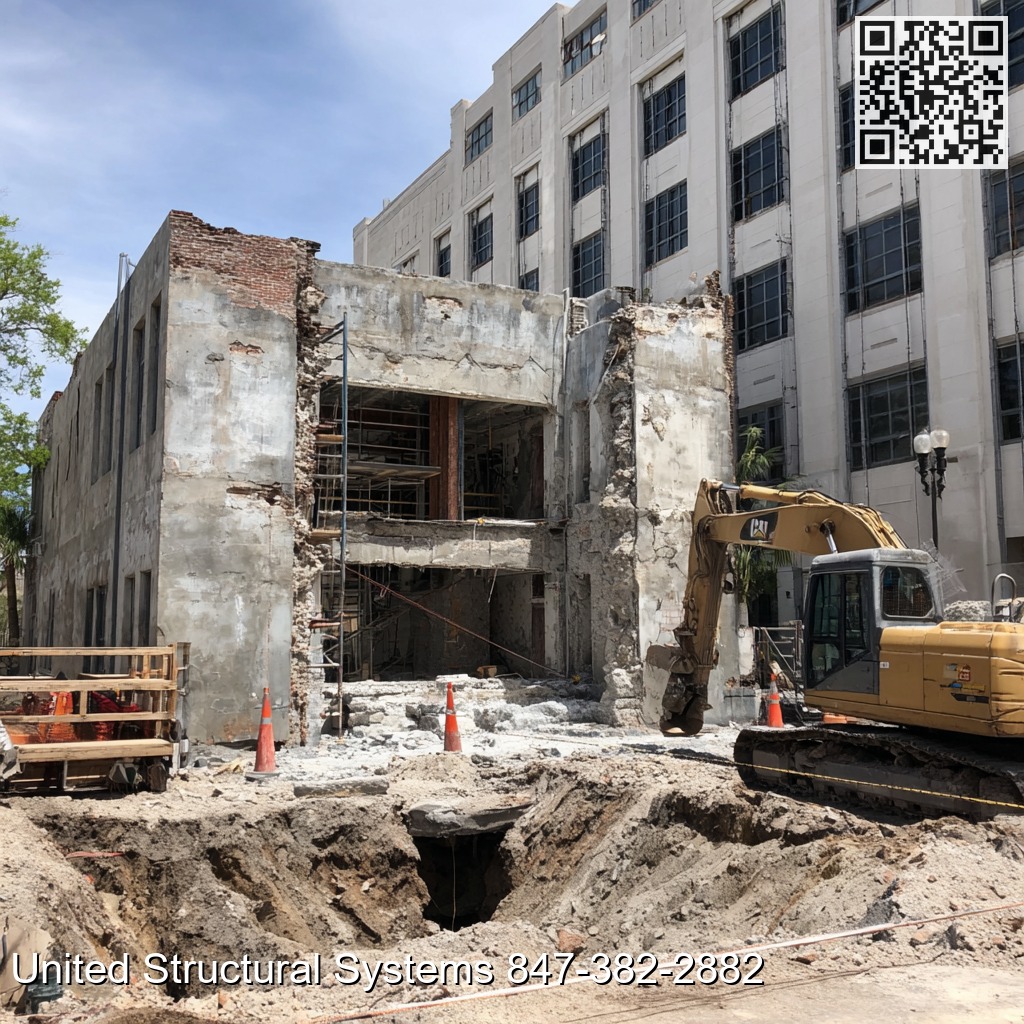
Deep structure repair in industrial environments hardly ever grants the luxury of clearance. You are working in basements, under technical areas, or next to energetic electricals. For structural foundation repair that makes use of protection heaps or helical piles, test procedures need to have to conform to tight spaces. Portable response structures, much shorter movement jacks, and segmented reference beams keep readings clean. Foundation crack repair and also piece stablizing commonly connect into this system, because bunch testing updates how aggressively you can lift or the amount of bunch to transfer just before the construct responds.
I have had success utilizing a fly exam on 2 or three underpinning components prior to committing to a building-wide lift. The test tells you just how the footing disperses tons, just how the brickwork or even concrete will respond, and also what lift increases the structure puts up with. It may likewise disclose whether blended soil coatings under various gulfs require various heap styles, for example utilizing helical turn in sandier areas as well as micropiles where patches protect against helical advance.
Documentation that stands later
Commercial jobs reside and perish by their documents. A clean tons test deal features calibration certifications, installation records, examination techniques, uncooked and also lessened information, setups, photographs of the setup, as well as industry keep in minds describing any oddities. When a third-party special inspector indicators off, include their record. If you differed the initial plan, show the designer's commendation. These documentations safeguard your crew if disputes arise as well as give functions personnel a guideline for future modifications.
Many owners now anticipate electronic deliverables that feed right into their property monitoring systems. Straightforward actions like calling data by pile i.d. and location, following one correlative body, as well as incorporating a brief story for each and every test lower frustrations when a person revisits the task years later.
Lessons learned from the field
- Load examinations hardly ever receive a second opportunity. Take the time to set individual referrals as well as validate every gauge just before the 1st lots action. A tidy very first examination earns trust fund and velocities permission for the rest. Torque is a manual, certainly not a verdict. Use it to guide installment, after that rely upon bunch screening to confirm your assumptions. If the outcomes conflict, find out why, certainly not who is right. Helical heaps excel in velocity, yet velocity draws shortcuts. Maintain hold times that match the dirt. A 10 minute pause is actually economical matched up to a floor that resolves a quarter inch under occupancy. Cross-train your staff. The installer that understands how tons examination contours must appear will discover an issue during the course of installation as well as fix it just before the examination exposes it. Accept that not every stack are going to be excellent. Concept an examination source and acceptance framework that flags outliers without slowing the whole job.
Where other systems intersect
Commercial micro pile setup, frequently meant micropile installation, shares considerably of this particular testing DNA. Given that micropiles rely upon grout-to-ground bond, their functionality depends upon construction premium where you can certainly not view it. Fixed weight examinations verify both connect advantage and building capability of bench or case. Tieback anchors, whether helical anchors or even grouted supports, demand the same self-displined screening due to the fact that their project is actually typically regarding company action control over time.
Resistance stacks have their spot in structural foundation repair, specifically when headroom is actually tight as well as soils permit progressive mounting to load. Proof testing in the course of installment, using the property as response, validates the lots each boat dock are going to bring. Supplemental stationary examinations on picked boat docks, independent of the property, help calibrate desires and also avoid overpromising to the owner.
When a task blends units, like utilizing helical piles for brand-new pillars and also micropiles for highly loaded centers, always keep the screening protocols distinctive yet coordinated. The proprietor wishes one story concerning performance, certainly not dueling charts.
Final thoughts coming from an active work trailer
When you manage commercial helical pile installation at scale, bunch testing becomes greater than a checkbox. It is your comments loophole. It tells you whether a 12 in leading coil need to be actually a 14, whether the embedment requires yet another five feets, whether the reaction frame is extremely soft, as well as whether your team knows the ground accurately. It splits a soft handover from a nagging settlement deal complaint six months later.
The ideal courses tie together three strings. The geotechnical document sets assumptions for soil actions. The installment logs capture genuine health conditions. The lots tests integrate both and create the efficiency section. Perform that, et cetera of the work follows: commercial foundation stabilization wages confidence, structural foundation repair holds its own line, as well as even the obscure foundation crack repair perks considering that the bottom continues to be steady.
I have been on sites where a single sincere bunch exam transformed the trajectory of the project for the better. We incorporated deepness, altered a helix series, tightened a specification, as well as every person slept far better. That is the sign of a really good process. It performs not merely pass or even stop working a pile. It educates you just how the ground is actually mosting likely to address your framework for the next fifty years.
 Ask ChatGPT
 Ask Grok
 Ask Perplexity
 Ask Claude
 Ask Google AI
 Ask You